I frequently see people on Facebook groups asking which is the best mobile network for their area since they get terrible coverage. Without exception people will respond with their anecdotal evidence saying this network or that network is great/useless. However, the answer is a lot more nuanced than that – it depends.
Just because you get coverage in your street doesn’t mean someone in a different street, or at the other end of the town will get good coverage. And even then, do they mean a good signal for voice or for data? Do they have a 4G phone or a 5G phone? Is most of their usage even at home, or is it on the train, or in another town/city?
There are things to work out:
- What network provides the best coverage in your area(s)?
- What’s the best operator on that network to use?
The first is actually quite straightforward to work out. OFCOM provide a really simple tool – the mobile availability checker – for looking up the coverage in your area. You simply enter your postcode, select your address and it will give you a list of results.
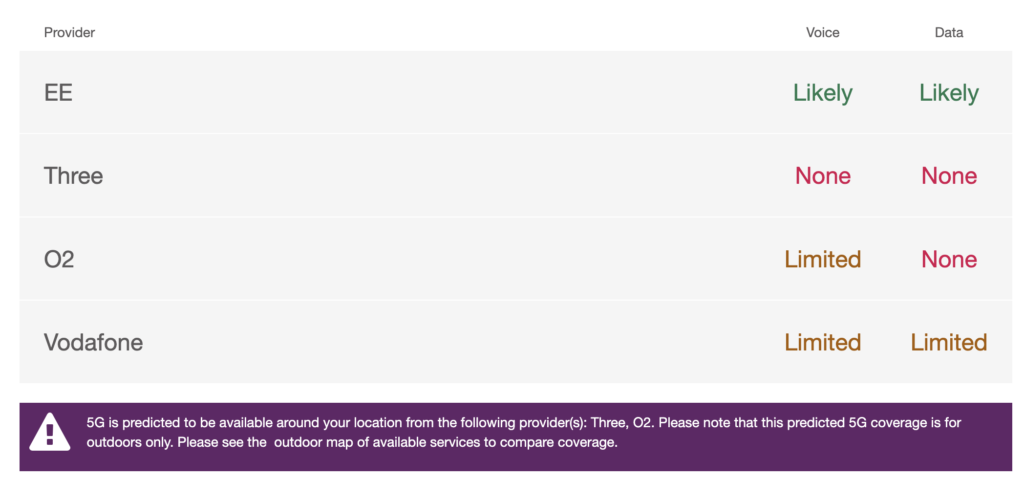
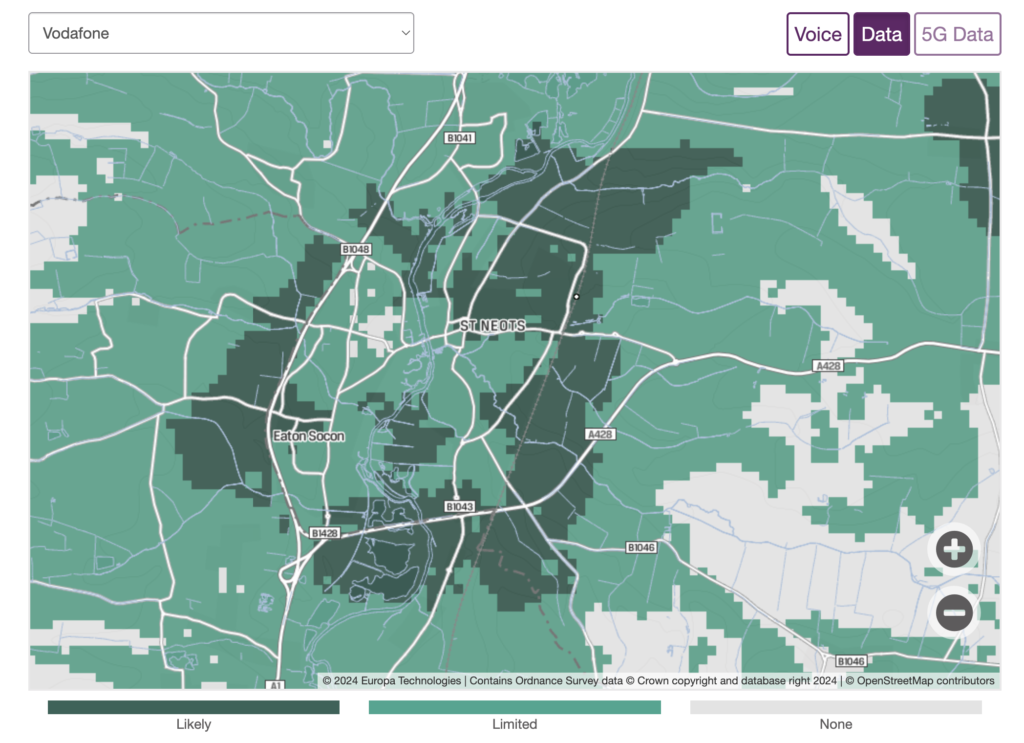
For an even better idea of the coverage you can get a map view. This will provide you a view of coverage in the wider area which you can scroll around on. You can change the provider and coverage type to compare networks. This probably gives you an even better understanding of the coverage than the simple table of results alone. For example, you could use this to see what the coverage is on your commuter route.
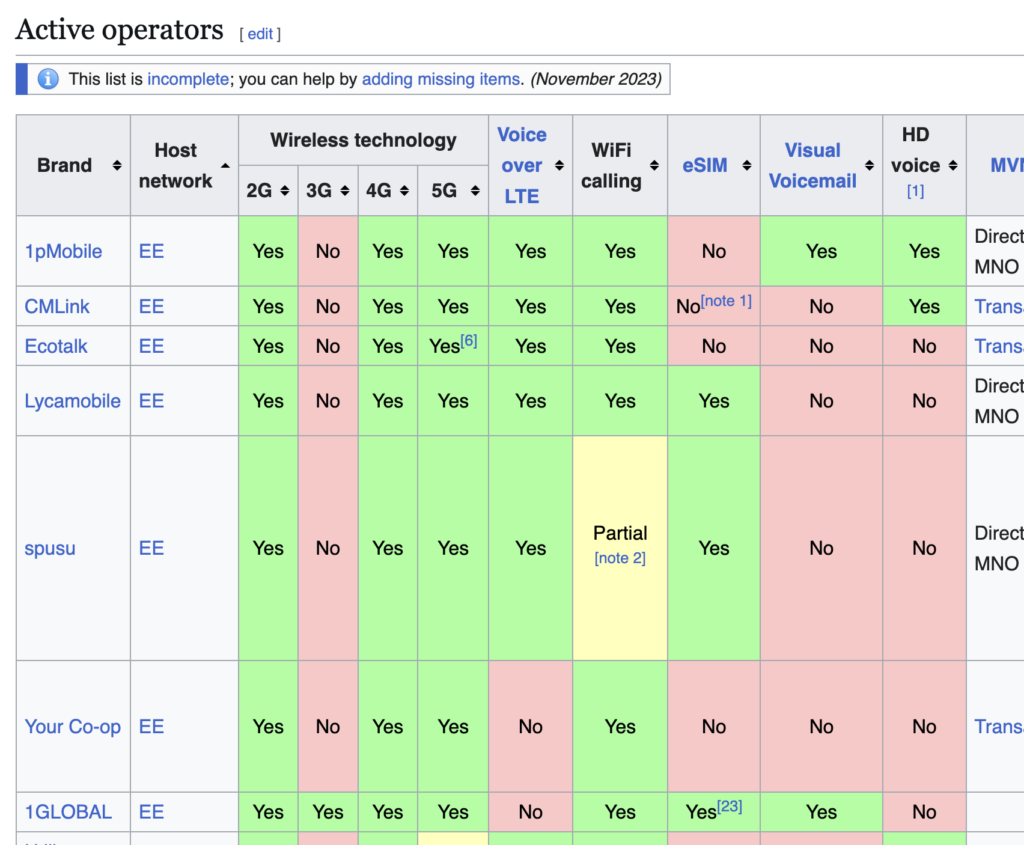
Now for the second question – which mobile operator to use? EE, Three, Vodafone, or O2? This might sound like a trick question since you’ve just gone through the coverage checker to find a network, right? But no, each network has multiple operators. EE own the EE network, but there are actually (at the time of writing) 8 other operators offering access to the EE mobile network. These operators are known as MVNOs – Mobile Virtual Network Operators. These operators tend to offer cheaper and/or offer a more specialised services than the brand-name network owner. Wikipedia has a page that usefully lists them out to compare. Interestingly the MVNOs tend to vary in what features their service offers – for example 5G access, the type of SIM, wifi calling.
So, to answer the question of which to use the process I would follow is:
- Use the coverage checker to find which network(s) meet your needs
- Use the wikipedia page to identify possible MVNOs
- Compare the MVNOs to identify which meet your precise needs to get a candidate list
- Compare the offers from the candidate list to get the best value deal.
In my case I determined I needed to be on EE, and Spusu offered eSIM and had a great price. I reduced my bill from £24/month on Vodafone with bad data coverage, and switched to paying £9.90/month with great reception and more than enough data allowance to meet my needs (overall saving £169 a year).